
Meet Camille Gaulon: From Lab to Leadership
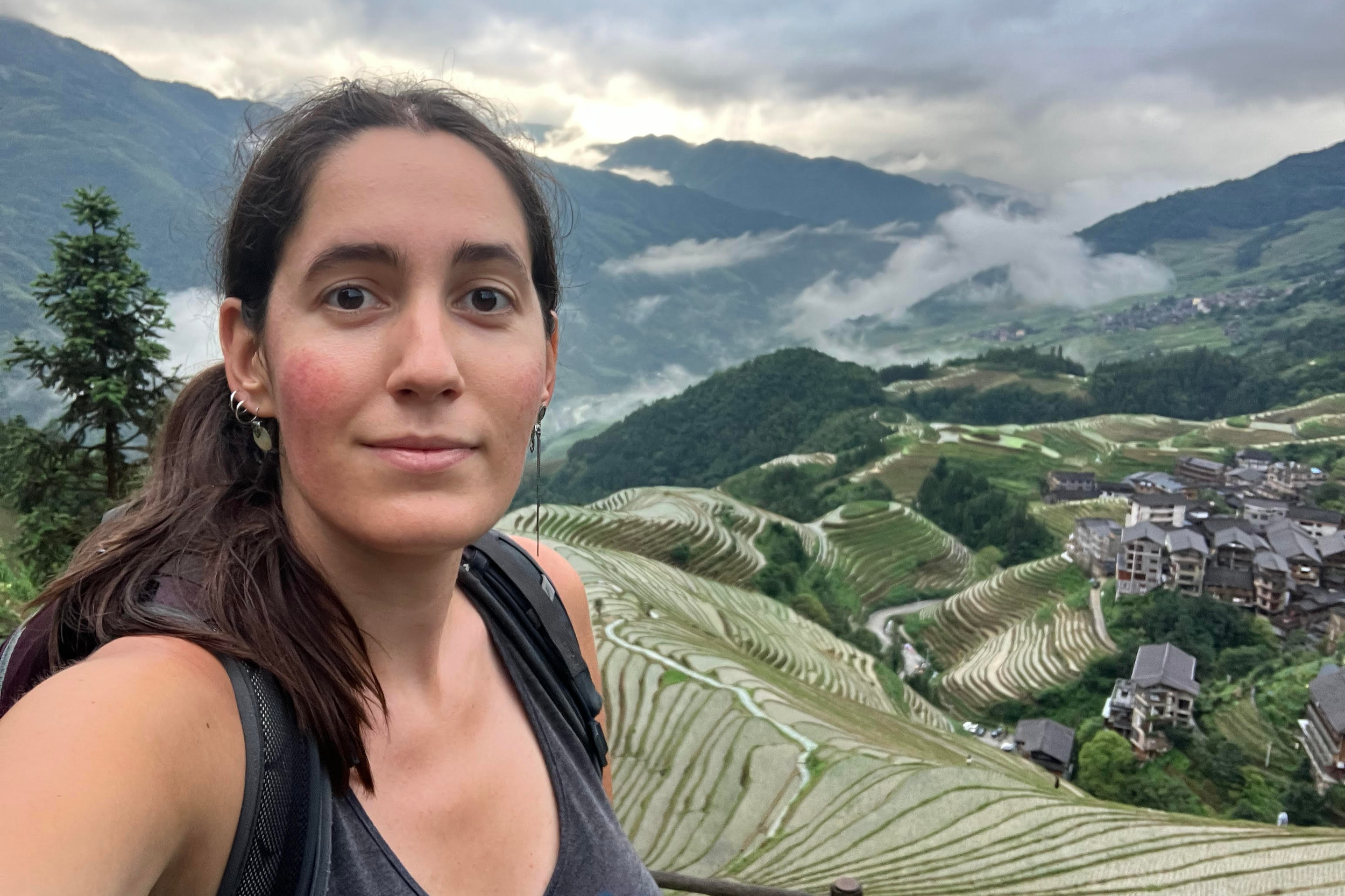
Could you introduce yourself in any way you like?
My name is Camille Gaulon. I hold a PhD in acoustics and have since moved behind the scenes of research: I am now the scientific and pedagogical manager of a doctoral school. In other words, I work alongside passionate — and fascinating — early-career researchers!
In what context and discipline did you complete your PhD?
I completed my PhD in physics, specializing in acoustics, in France, at Université Paris Cité (known as Paris Diderot at the time), within the MSC laboratory — Matière et Systèmes Complexes.
Why did you choose to pursue a PhD?
I was very passionate about my field, acoustics, and I wanted to continue exploring the subject in greater depth. During my Master’s degree, I had completed an R&D internship where I was told that recruitment was generally done at PhD level — that little seed of an idea was planted then. In the end, I now do something quite different, and I do not regret it at all!
What was your first step after your PhD?
I think I might hold the Guinness World Record for the shortest postdoc in history: one month — actually shortened to two weeks — in my PhD laboratory. The goal was to complete one final experimental study with one of our partners while giving myself a bit more time to figure out what I wanted to do next.
Did you already have a clear career plan at that time?
I had a general direction in mind, which could be summed up as: “staying in the world of research without being a researcher myself,” but nothing precise or fully decided. It could have been science communication, which I had already been heavily involved in during my PhD and truly enjoyed, or research valorization, or supporting early-career researchers. The last option is ultimately the one that came closest to the path I eventually chose.
What were the main challenges you faced?
I could not really rely on advice from my PhD supervisors because they were not very familiar with non-academic career paths, and no one in my family had followed this kind of trajectory either. I also needed to make sure I would not regret stepping away from research itself. But honestly, I trusted my gut feeling — and it turned out to be right.
What is your current position and field of work?
I am the scientific and pedagogical manager of a doctoral school. Concretely, I support doctoral researchers throughout their PhD journey, from the moment they apply to the program all the way to their defense, with a particular focus on the doctoral training program we offer them.
How is your PhD useful to you today?
Since I work daily with PhD candidates, it is essential to have experienced doctoral studies myself in order to provide the best guidance possible — both regarding the training programs we design and in being a relevant support person when doctoral researchers encounter difficulties.
Which skills developed during your PhD do you use the most?
Mainly transferable skills (the famous ones!): beyond simply understanding what a PhD experience entails, there is project management, the ability to communicate with both experts and broader audiences, analytical and synthesis skills, and, of course, critical thinking.
Have you experienced one or more professional transitions?
So far, my main professional transition has been moving from being a researcher to working in scientific and educational support. I am passionate about many topics and remain very curious, so another transition in the future is definitely not impossible!
Were these transitions chosen or imposed?
It was entirely my choice.
What was the most difficult aspect of these changes?
A bit of impostor syndrome at first — especially since I was supporting PhD candidates while having only just defended my own thesis. Fortunately, once you become aware of impostor syndrome, you can gradually start counteracting it. Knowing that I had been trusted and hired by both HR and the doctoral school directors was also a rational argument that helped reassure me.
Looking back, would you pursue a PhD again? Why?
Yes, without hesitation! It is an incredible — and rare — opportunity to immerse yourself in a subject for three years, explore it as deeply as you want, experiment, and discover. It is an immense source of personal enrichment and provides training in so many different ways.
What would you say to a PhD student who is currently doubting themselves?
A PhD is a formative experience where things do not always go as planned, but that is precisely what helps you develop many strategies to overcome obstacles — skills that become useful in many other contexts afterward. And if the doubt concerns career prospects, I would emphasize that a PhD can lead to many different professions, including some you may not even know exist yet.
How do you see the next stage of your career?
I see myself continuing to work with early-career researchers as much as possible, because they are the ones who will shape the future of research. I am also developing more and more international collaborations — often centered around doctoral education — and I can definitely see myself becoming even more involved in that direction.
What advice would you give to PhD graduates going through a transition?
Above all, do not limit the range of possibilities: the horizon and opportunities are genuinely vast! Trust yourself — you have an enormous variety of skills and abilities to draw upon.
