
Мeet Abarna Lingeswaran: Senior Scientist at a climate-tech start-up
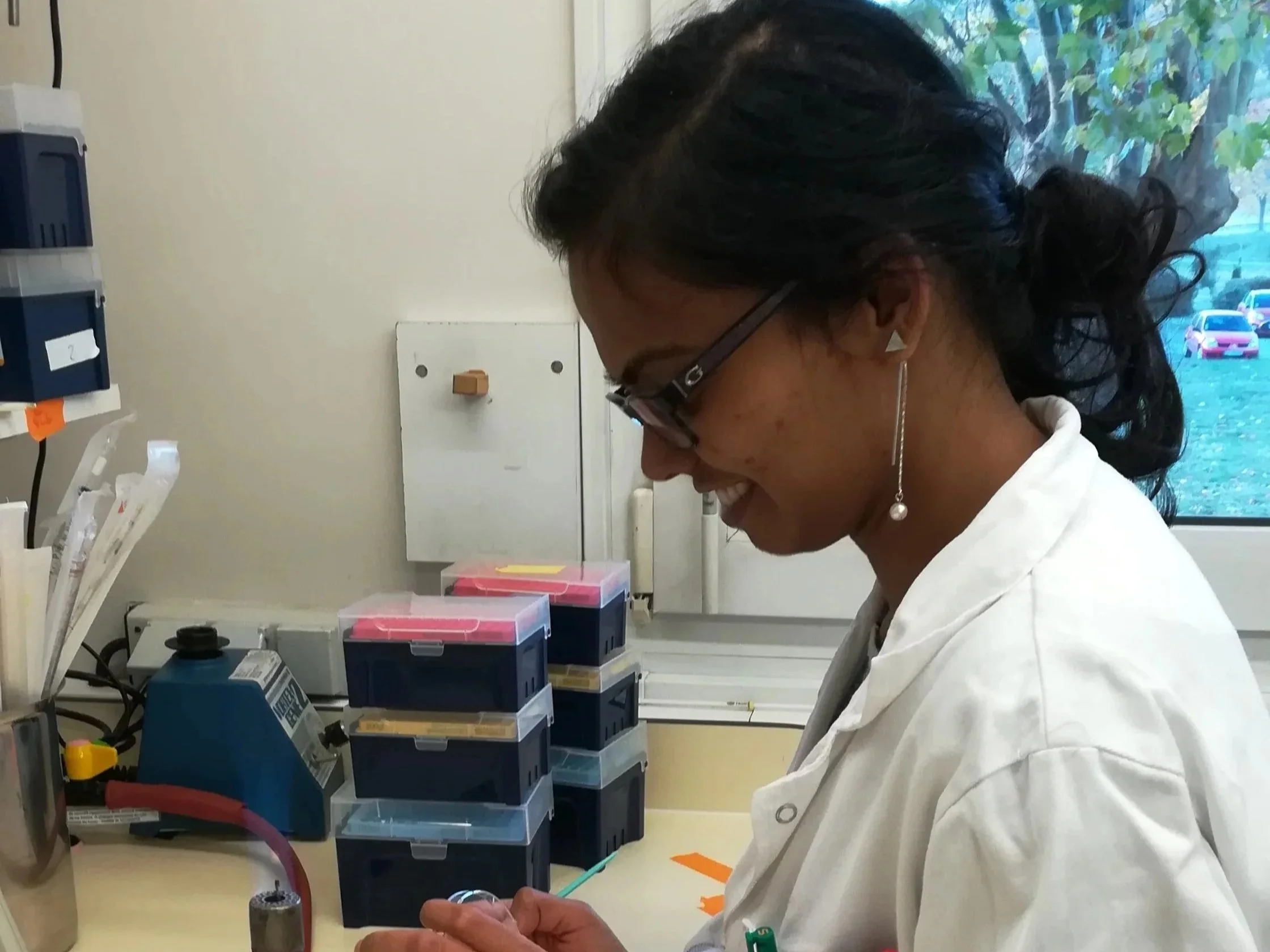
I completed my PhD in Microbiology in the “Peptides et Communication Bactérienne” lab at MICALIS, within the INRAE institute (Jouy-en-Josas), France.
Why did you decide to pursue a PhD?
My MSc internship helped confirm that I was passionate about research. I enjoyed diving deeper into scientific questions and was motivated by the idea of developing innovative solutions.
What was your first step after completing your PhD?
I defended my PhD during the COVID period. Instead of applying for a postdoctoral position outside of France, as I had initially planned, I decided to explore other options. Six months after my defense, I joined Hybrigenics Services as a Scientific Project Manager within an R&D services platform.
Did you have a clear career plan at that time?
I did not have a clear plan, as I had stepped away from my initial goal of pursuing a postdoctoral experience abroad. I was therefore open to different opportunities without knowing exactly where they would lead. With this mindset, I undertook a volunteer experience to support a start-up project while exploring opportunities in the private sector. This allowed me to gain exposure to the start-up ecosystem.
What were the main challenges you faced?
After completing a PhD, one of the main challenges is learning how to position yourself in the private job market, especially when your research was fundamental rather than industry-oriented. It is essential to recognize the transferable skills developed during a PhD. Another challenge is being able to step back from your specific research topic and remain open to a broader range of career options than you may have initially envisioned.
What is your current position and sector?
I am currently working as a Senior Scientist in Microbiology at a climate-tech start-up in Paris.
How is your PhD useful in your current role?
My PhD experience enables me to identify key challenges, develop practical solutions, prioritize experiments and tasks to meet milestones on time, and clearly communicate scientific questions and approaches to teammates from diverse disciplines.
Which PhD-developed skills do you use the most today?Troubleshooting.
Have you experienced one or several career transitions?
I have experienced two career transitions. They were mostly chosen. The most difficult aspect of these changes was the uncertainty of whether I was making the right decision at the right time.
Looking back, would you do a PhD again? Why?
Looking back, I would make the same choice to pursue a PhD. It helped me discover my personal resilience and taught me how to navigate the complex world of research.
What would you say to a PhD candidate who is currently doubting?My PhD advisor once told me to attend a PhD defense to better understand what the final stage looks like. It helped me visualize the outcome. I would advise gathering as much information as possible about the team before starting—a strong and supportive team makes a significant difference. It is completely normal to have doubts before, during, and even after a PhD. Reading and listening to podcasts about others’ PhD experiences can also be helpful. Make sure you have a solid group of friends to support you throughout the journey. If you are doubting, it often means you are taking the decision seriously. It is not an easy path, but it can be very rewarding if you choose to pursue it. And remember, no decision is irreversible.
What is your greatest achievement since completing your PhD?
The experience that made me feel most fulfilled is my current role, where I joined a start-up at a very early stage two years ago. Although the mission is unfortunately coming to an end due to a lack of funding, I feel proud to have contributed to a meaningful scientific project and to have worked with an incredibly passionate team representing more than ten countries and different disciplines. The team and the scientific challenges I worked on reignited my passion for microbes and science.
How do you envision the next steps of your career?
I am once again reflecting on my next steps, as I did after my PhD, but this time with more experience and a clearer understanding of what I do not want to pursue. I am currently exploring different opportunities in R&D.
What advice would you give to PhD holders in transition?
Although transition periods can feel challenging, they are often the best moments to reinvent yourself. You can continue exploring different options throughout your career for as long as you wish. A PhD equips you with the skills needed to analyze and solve complex problems and to identify key challenges in your field. Stay open to exploration, and your transition will naturally take shape.
