
Meet Élodie Chabrol: Science communication expert
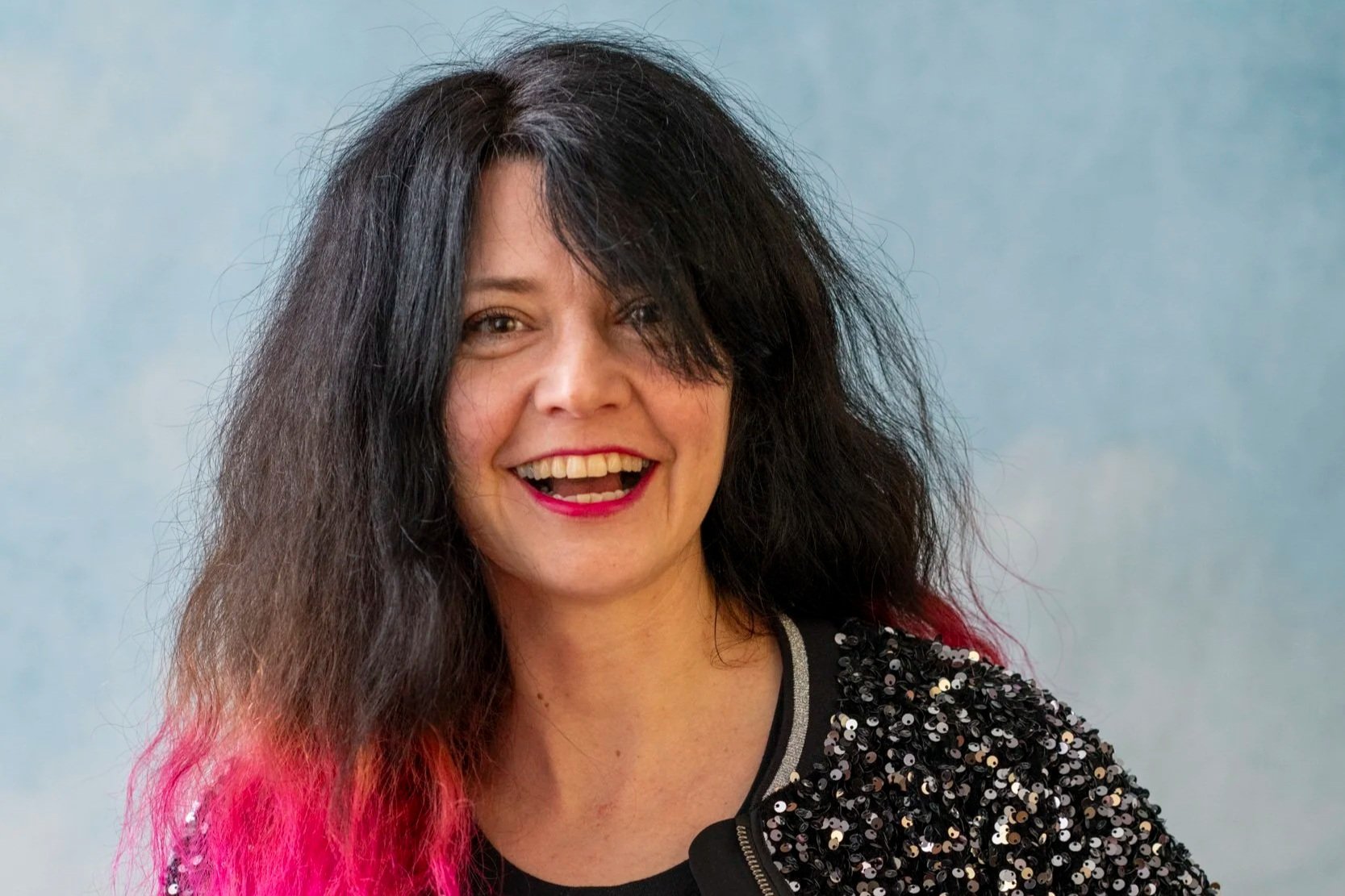
My name is Élodie Chabrol. I am a former researcher in neurogenetics who transitioned into science communication. Today, I help researchers communicate their work by training them and by creating and hosting events. I am also the international director of the Pint of Science festival and the founder of its French branch.
In which discipline did you complete your PhD?
I worked on epilepsy, particularly a form that sometimes manifests through auditory hallucinations—voices—which some researchers suspect may explain the case of Joan of Arc.
In what context (country, institution, laboratory)?
In France, in a laboratory at the Pitié-Salpêtrière in Paris, now the Institut du Cerveau - Paris Brain Institute, in the team of Stéphanie Baulac.
Why did you choose to pursue a PhD?
Initially, I wanted to become a life sciences teacher, but discovering research during a first-year Master’s internship was love at first sight. I thought that as a researcher I could also teach. I pursued a PhD to become a lecturer-researcher.
What was your first step after your PhD?
Six months of unemployment while searching for a postdoc in England. It took longer because I was moving with my partner, who worked in the private sector, so we had to coordinate our departures. I eventually found my first postdoc at University College London in the UK, in a slightly different field: sciatic nerve repair. I wanted to open new doors and change topics so I wouldn’t spend my entire research career on a single subject and would have more options when returning to France.
Did you have a clear career plan at that time?
Yes, very clear—but it was a huge lie I was telling myself. I planned to spend two years in England, publish papers, return to France, and take competitive exams to become a research scientist or lecturer. But things did not go as planned. My first postdoc connected me with major figures in the field who were close to retirement and not very interested in publishing. They were focused on answering their biological questions. With six different projects in two and a half years, I ended up with zero publications and seriously considered leaving research. Then I was offered my dream postdoc: continuing work on epilepsy genetics (my PhD topic), this time in gene therapy. I jumped at the opportunity.
What were the main challenges you faced?
The main challenge was working in a very sexist lab. Being a woman clearly did not help. I did not experience harassment, but there was a glaring lack of support from my supervisor, whether for writing papers or presenting at conferences. This difficult environment pushed me to consider other paths at the end of my postdoc. The experience ruined my potential research career, but at the same time I had already stepped into science communication, which allowed me to pivot in that direction.
What is your current position and sector?
I am a science communication consultant. I work with universities, PhD students, private research companies, and foundations—anywhere people are doing science.
How is your PhD useful to you today?
It is useful every day. First for adaptability, learning, and resilience—and especially for not being afraid to fail. I completed an experimental PhD where 80% of my experiments ended up in the trash. It taught me the lesson of the first pancake: it’s always a bit of a failure, but it helps make the next ones great. I’m not afraid to dive in; that’s something my PhD truly gave me.
Which PhD-developed skills do you use the most?
Of course, my understanding of research and how it works. My postdoc also gave me English—I left for London and came back bilingual. I mostly use soft skills: stress management, autonomy, critical thinking, and a deep understanding of the academic world. The skill I use most, often without realizing it, is the scientific method. When I start a new project in an unfamiliar field, I do exactly what I did in the lab: I read, ask around, test, adapt, and improve.
Have you experienced one or more career transitions?
One major transition: moving from a postdoc to science communication. From the outside it looked simple—I stayed in science—but personally it was huge. I went from a job where I had a PhD and experience to a field where I only had experience and no formal diploma in science communication. I still had four and a half years of experience: launching a festival in England and France, recruiting volunteers, managing social media, and training people in public speaking. It was substantial experience. Yet I went through a real identity crisis: I saw myself as a researcher and wondered whether I was still a scientist. I realized I was no longer a researcher, but I would remain a scientist for life.
There was also impostor syndrome: I was training people in communication without an official qualification. From the outside the transition looked smooth; personally it was a real challenge that required months of reflection and personal work.
Were these transitions chosen or imposed?
100% chosen. I had completed my postdoc project. I could have stayed in the lab, restarted a project, or worked on translating therapy into clinical applications. I chose to leave research.
What was the hardest part of these changes?
I had to grieve a research career, even though I love what I do today. At the time it felt like failure. I often say, “how I failed successfully”: a setback that allowed me to succeed in another way. Impostor syndrome and an identity crisis lasted several months.
Looking back, would you do a PhD again? Why?
Absolutely—and I would even do my two postdocs again. They brought me a tremendous amount of experience. I loved being a postdoc: continuing research, living the scientific life, writing grant applications, papers and reviews, and supervising my own PhD student. Most importantly, I saw both sides of the PhD experience—as a doctoral student and as a supervisor—which not everyone gets to experience. Those 12 years in research gave me solid expertise. I understand academic careers and what it means to be a PhD student or postdoc. They also strengthened the soft skills I mentioned earlier: adaptability, learning, and resilience.
What would you say to a PhD student who is doubting?
There are a thousand possible paths. The key is not to just drift along. Make thoughtful choices, whether you stay in academia or leave. Your decisions—training, career, postdocs—should align with your values and aspirations. Don’t let external expectations define your path. If you’re unsure, run small experiments: an informational interview, a job-shadowing day, a short volunteer project, a brief assignment. These provide concrete insight without turning everything upside down. Talk about it early—with other PhD students, alumni from your lab, and people outside academia. It breaks isolation and opens doors.
And one important thing: don’t confuse “I’m tired” with “I chose the wrong path.” Sometimes you need rest and support, not a radical decision. Your skills are transferable, even if you don’t see it yet: learning quickly, managing uncertainty, explaining clearly, structuring work, and persevering. And if you leave, you’re not betraying science—you’re simply changing your place within its ecosystem.
What is your greatest achievement since completing your PhD?
My greatest achievement is clearly Pint of Science. It’s something I never saw coming and still find surprising. This year we passed a milestone by exceeding 500 cities, and it feels incredible to be part of that adventure.
As a freelancer, my biggest achievement is more cumulative: each new project that challenges me, sometimes scares me because it’s new, but that I enjoy and complete successfully. It’s the accumulation of all those small challenges accomplished since leaving research.
How do you see the next steps in your career?
I want to continue supporting researchers, develop new creative projects, and make science more accessible and inclusive. I’d also like to explore new forms of science communication with innovative content and provide even more support for young women in science. Most importantly, I want to enjoy my work and sprinkle a bit of my own creative spark into every project I take on.
What advice would you give to PhD holders in transition?
Dare to explore, dare to change, and don’t be afraid to step off the beaten path. The skills developed during a PhD—rigor, perseverance, adaptability, and the ability to learn—are valuable everywhere, even outside research. Your PhD is not your identity; it’s a strong foundation for building a unique career. Trust your intuition and your path, even if it looks different from others’.
