
Meet Marie-Émilie Terret: Curiosity as a guide!
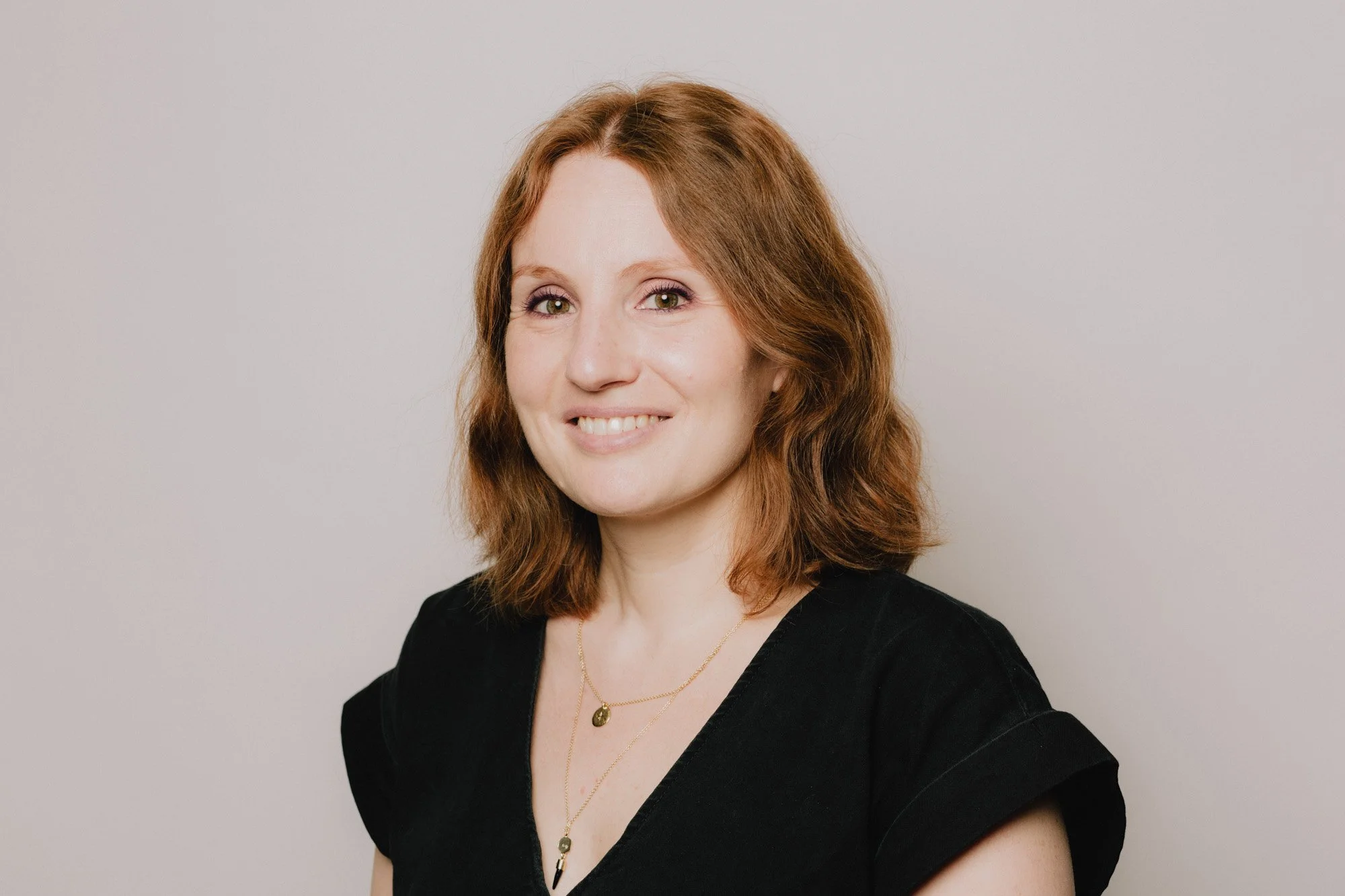
Recipient of the Mid-Career Achievement in Mentoring Prize 2023, Marie-Émilie Terret is a Research Director at Inserm and co-head of a research team at the Center for Interdisciplinary Research in Biology (CIRB – Collège de France).
Could you introduce yourself in your own way?
I am a researcher in cell biology and a Research Director at Inserm. My team studies the formation of oocytes in mammals (mice and humans), cells which, once fertilised by a sperm cell, give rise to an embryo and subsequently to a new individual. These atypical cells, which remain largely mysterious, provide a fascinating model for addressing both fundamental and applied research questions.
In which field and context did you complete your PhD?
I completed and defended my PhD in Developmental Biology at Université Paris VI (now Sorbonne University) in 2004, in the team led by Marie-Hélène Verlhac, within the Laboratory of Cell Biology of Development (UMR 7622).
What is your background? Why did you choose to pursue a PhD?
I became interested in science relatively late. Unlike some researchers, I did not experience a sudden revelation in childhood. I was always drawn to biology and imagined careers such as veterinarian or physician, but never researcher—I didn’t really know what that meant.
My path was non-linear. After completing my undergraduate degree, I went on to study for a Master’s degree at ENS Lyon, where I met Vincent Laudet during my first year of the Master’s programme. His dynamic and passionate way of teaching the cell cycle, along with the opportunity to discuss his profession, triggered a real turning point for me. A summer internship in a laboratory confirmed my desire to pursue research. I then completed a DEA (now equivalent to a Master’s degree) in Molecular and Cellular Biology of Development at Sorbonne University. During that time, I met Marie-Hélène Verlhac, who had just established her team working on mouse oocytes.
I decided to pursue my PhD under her supervision. Thanks to this mentorship, I published three first-author papers, which enabled me to join an excellent laboratory for my postdoctoral research.
Marie-Hélène continued to support my career: I was recruited as a researcher at Inserm in 2010 in her team upon returning from my postdoc, and since 2017 we have co-led the team.
Pursuing a PhD was therefore a conscious choice, but one strongly shaped by encounters, chance, intuition, and qualities such as perseverance, determination, resilience, independence, and a desire for freedom.
What was your first step after your PhD?
After completing my PhD in 2004, I wanted to pursue a postdoctoral position abroad. Experiencing different scientific environments has always been a major source of inspiration and creativity for me.
I applied to around ten labs and, despite my doubts, was accepted by all of them. I ultimately chose to join Prasad Jallepalli’s lab at the Sloan Kettering Institute in New York, where I stayed for five years (2004–2009). It was the place where I felt the greatest sense of freedom, with the opportunity to reinvent myself.
After my time in the United States, I returned to France with a postdoctoral fellowship from the ARC Foundation. I passed both the CNRS and Inserm recruitment exams in 2010 and chose to join Inserm, returning to Marie-Hélène Verlhac’s team.
In 2011, the team moved to the CIRB at the Collège de France, and in 2017 I became co-head of the team (“Mechanics and Morphogenesis of Oocytes”).
What were the main challenges you faced?
Looking back, the main challenges were a sense of illegitimacy and my tendency to overthink and want to control everything. I also used to worry about running out of ideas or questioned my contribution to society.
What helped me was not comparing myself to others. Over time, and thanks to meeting many people from diverse backgrounds, I learned to better understand myself, and to be honest with myself. Curiosity has always been my guiding force.
What is your current position?
I am currently a Research Director at Inserm and, since 2017, co-head of a research team at the CIRB (Collège de France), working on the mechanics and morphogenesis of oocytes.
How is your PhD useful to you today?
My PhD is useful every day. It taught me how to investigate, conceptualize, ask questions, attempt to answer them, analyze results, and structure findings—skills that are central to my work as a researcher.
Have you experienced any professional transitions?
Yes, between my PhD and postdoc, and between my postdoc and my permanent research position. These transitions were both chosen and necessary to pursue this career.
What was the most difficult aspect of these transitions?
Adapting to new environments—whether cultural or scientific—and dealing with the fear of failure: “What if I don’t succeed?”
Would you pursue a PhD again?
Without hesitation. It is an extraordinary scientific and human adventure that offers far more than subject-specific knowledge—a comprehensive training that is valuable in many careers.
What would you say to a PhD student who is currently struggling?
Doubt is inherent to the research profession—and even essential. It is not a weakness but a strength, as long as it does not become paralyzing.
It is important to know yourself and to distinguish your own aspirations from those projected by family or society.
What is your greatest achievement?
My achievements are both scientific—particularly contributing to understanding how oocyte mechanics regulate development—and human.
Throughout my career, I have mentored many students and early-career researchers, of whom I am very proud. They are part of my “scientific family” and have greatly contributed to who I am today.
How do you see the next steps in your career?
It is difficult to say : you never know what the future holds.
What advice would you give to PhD graduates in transition?
Take your time, engage with people from diverse backgrounds, avoid comparing yourself to others, be honest with yourself, learn to understand what you truly want—and stay curious.
