
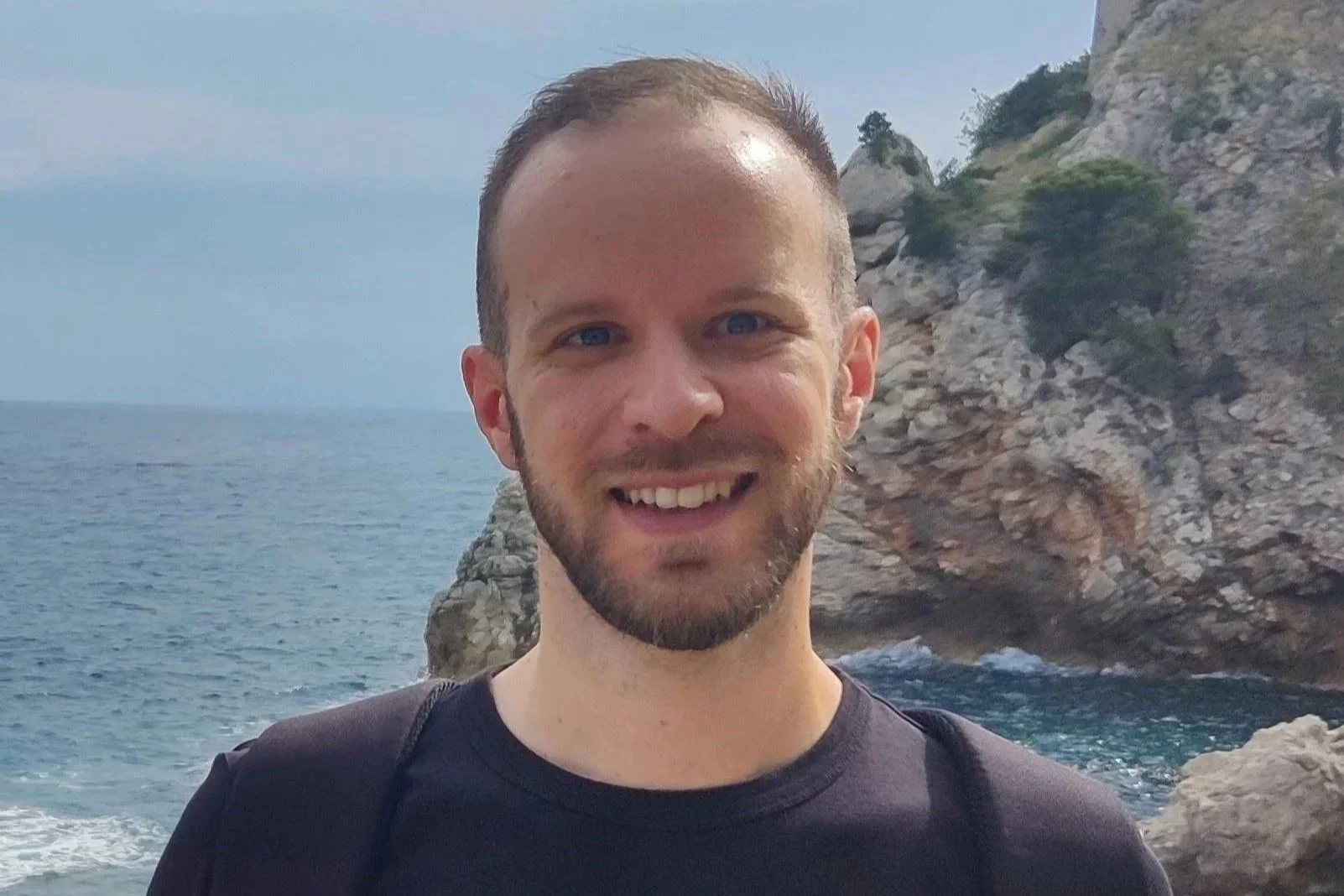
Meet Vedran Galetic: Senior AI Research Scientist at Airbus
Could you introduce yourself first? Where are you from?
I was born and raised in Zagreb, Croatia. I received my MSc in ICT at the Faculty of Electrical Engineering and Computing (FER). I worked as a software engineer at Ericsson until I moved to Bristol, UK, in 2017 for a data science job at Airbus.
In which field and context did you complete your PhD?
Language and Cognitive Neuroscience at the University of Zagreb.
Why did you decide to pursue a PhD?
I wanted to formalise research into interdisciplinary topics I felt burning curiosity about, such as the neural basis of mind and intelligent behaviour.
What was your first step after completing your PhD?
Celebrate properly :) And shortly thereafter, moved to the UK, which I felt offered more opportunities for an industry career with a strong emphasis on upstream scientific research.
Did you have a clear career plan at that time?
Not really. I was aware that I may not be able to pursue research topics from my PhD in an industrial environment immediately. I took one step at a time and gradually educated my colleagues on the more fundamental topics around cognitive science and neuroscience, which are now incredibly relevant for AI research and development.
What were the main challenges you faced?
Reconciling long-term upstream research with direct applicability in running industrial scenarios.
What is your current position and sector?
Senior AI Research Scientist, Aerospace.
How is your PhD useful in your current role?
Anticipating and describing shortcomings of current AI and their impact on trustworthiness and certifiability, which is crucial for our industry domain. My interdisciplinary PhD gave me credentials and sufficient breadth of knowledge to approach the ever-important issue of sustainable AI development in a systematic and multi-faceted way.
Which PhD-developed skills do you use the most today?
Understanding how different relevant disciplines approach the questions of cognitive science and being able to confidently talk to scientists of other disciplines (linguistics, cognitive psychology, neuroscience, etc.), ensuring joint progress.
Have you experienced one or several career transitions?
I have always worked in industry, even during my PhD.
Looking back, would you do a PhD again? Why?
Absolutely, I think it provided me with invaluable experience. I had to be self-reliant and independent in generating ideas to bridge the gaps identified in the state of the art, and testing them through empirical studies, with a real possibility of failure. Quite early on, it was soberingly clear how much I do not know, and neither do entire scientific communities. I tasted humility of spending a lot of time and resources to provide a tiny building block in a vast mosaic of a long-standing research area. Finally and maybe most importantly, it prepared me for lifelong learning, which is absolutely essential for a successful career in research.
What would you say to a PhD candidate who is currently doubting?
Make every effort to push through and complete your PhD, provided the topic is compatible with your passion and interests. It's rarely a walk in the park and many of us have been there.
What is your greatest achievement since completing your PhD?Raising awareness of the human-centred topics at my workplace and their relevance for AI, which resulted in an excelled career path.
How do you envision the next steps of your career?
I will continue self-education and research in AI, cognitive science, and neuroscience. On the way, I will share knowledge internally and publish any novel results. University fellowship is also a very attractive opportunity.
What advice would you give to PhD holders in transition?
Be clear and honest about priorities and expectations from your career. Do not let vanity or peer pressure get in the way of your professional fulfillment.
